
FOR WORKPLACES
Organizations run
on relationships.
TEAMS AND LEADERS
IN AN ERA OF VUCA CONDITIONS, RELATIONSHIPS MATTER MORE THAN EVER
Under VUCA (volatility, uncertainty, complexity, and ambiguity),
people retreat to safety.
What Pulling Back Looks Like
Defer to the room rather than name the disagreement.
Edit the view that might cost something to hold.
Stay in the lane that worked last quarter.
Extend less trust and keep creative ideas to themself.
Run new ideas through one trusted person, only.
What Reaching Forward Looks Like
PROGRAMS FOR HR, TALENT, AND TEAM LEADERS
Four Options for Organizational Leaders
Begin with a live overview to see how the framework fits your situation.
Then learn to build Anchor Relationships in your own network.


START HERE
Informational Session
45 minutes • Live Webinar
A guided overview of the Anchor Relationships® framework and the two programs built on it, for leaders and teams deciding where to begin. See how the measure works and which program fits your situation before you commit a team.
TEAM EFFECTIVENESS
The Relational Spark
Half-day workshop • One intact team or group of leaders • Follow-up assessment at 4 to 6 weeks
A three-hour interactive program on capacity-building relationships at work: working relationships in which each person helps the other grow, strengthens the other's confidence, and makes it easier for the other to act on what they believe. The framework identifies nine everyday behaviors that enable both people to become more confident and capable. Participants discover how they're showing up in their workplace relationships and get a clear roadmap for helping each other perform at their best.
WHAT IMPROVES
Teams report four changes: ideas surface sooner, disagreement becomes useful, asking for help feels easier, and relationships experience less friction.
WHAT YOU RECEIVE
A private report for each participant on one working relationship, rated on nine behaviors
Personal workbooks and team-level commitments written in the team's own words
Specific actions for each participant, drawn from their report
A before-and-after summary showing which behaviors improved
A shared language for evaluating and improving workplace relationships across the organization
ORGANIZATIONAL EFFECTIVENESS
Relational Change Management
For a change that is starting or has stalled • Pairs and sub-teams • Second measure at about 60 days
When workflows change, relationships shift, too. Most change programs tell people what to do and when. Relational Change Management gives people the words and skills to decide who they need to work well with, and to make those relationships effective. Build the relational ties, then plan the work.
TWO WAYS TO BEGIN
Starting a change. Before planning the work, the people who will depend on each other learn the nine behaviors, state what they need from one another, and agree in writing on how they will work together. They take the assessment at about 60 days.
Restarting a stalled change. Pairs and sub-teams where the work has slowed take the assessment first. A session works from the results and sets shared goals. A follow-up report shows what changed.
WHAT IS INCLUDED
A summary of themes across the group at the start and at the second measurement
Side-by-side reports that stay with the two people who took them
A view of where the change initiative has relational support and where it is at risk
The option to certify in-house facilitators
ENTERPRISE PROGRAM

Authorize
In-House Certification for Facilitators
One and a half days • On-site • All training materials included
For organizations that want to run the program themselves. The training happens at your site, and your internal facilitators leave certified to administer the assessments and deliver the framework to your leaders and teams.
WHAT IS INCLUDED
Certification to administer all four assessments: the Individual Assessment, Becoming Anchors, Relationship 360, and the Team Assessment
The full program curriculum condensed for on-site delivery, taught by Kellie Cummings, MAPP, creator of Anchor Relationships®
Complete facilitator materials, including session guides, participant workbooks, and interpretation guides for every assessment
Practice sessions where your facilitators interpret real results and rehearse the conversations they will lead
Assessment access at enterprise pricing so your team can deploy without purchasing per engagement
Free quarterly research briefings that bring your facilitators the newest findings on relationships, wellbeing, and performance while the research is still current, with direct application to the work they are leading
Annual re-certification for each facilitator, which keeps your team current as the assessments, reports, and materials are updated
RELATIONSHIP ARCHITECTURE
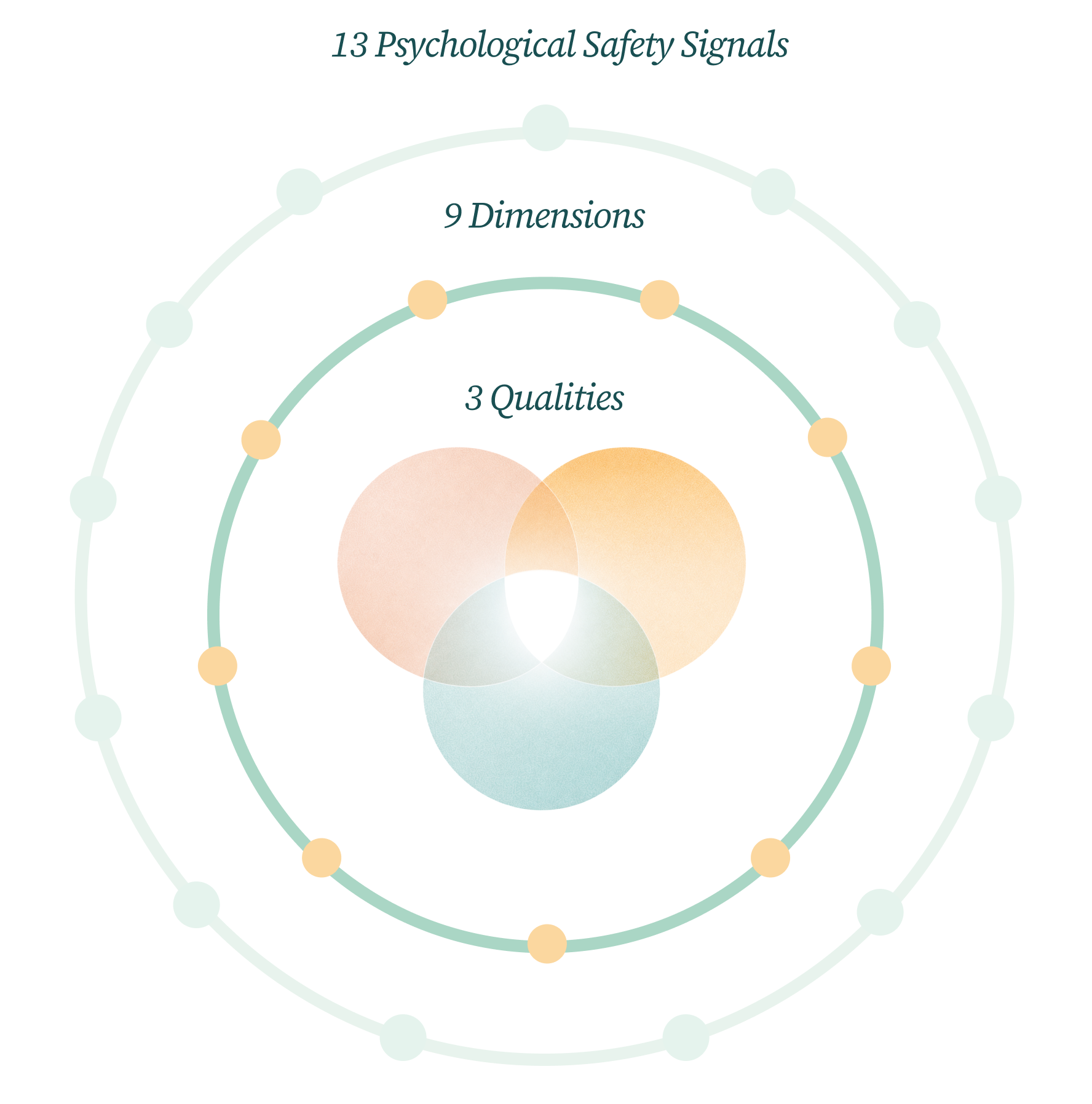
Nine dimensions that
measure relationship quality.
The assessment’s core dimensions illuminate observable behaviors in workplace relationships, each a research-grounded contributor to relational quality according to Self-Determination Theory.
QUALITY 01 - GROWTH
Mutual investment
in growth
Dimension 1.A
Handling disagreement
Whether disagreement produces learning, or whether it produces defensiveness and avoidance.
Dimension 1.B
Respecting choices
Whether development respects each person’s agency, or whether it is steered toward someone else’s agenda.
Dimension 1.C
Celebrating success
Whether good news is met with interest that helps each person grow, or whether it passes without notice.
QUALITY 02 - EFFICACY
Enhancement of self-efficacy
Dimension 2.A
Recognizing strengths
Whether each person’s distinct capabilities are seen and named specifically, or generalized and taken for granted.
Dimension 2.B
Creating safety
Whether mistakes and risks can be brought into the open and learned from, or whether they are hidden to protect the relationship.
Dimension 2.C
Building Capability
Whether collaboration leaves a person more capable afterward or introduces friction without producing gains.
QUALITY 03 - VALUES
Values Coherence
Dimension 3.A
Speaking honestly
Whether each person can voice the dissenting view, or has to edit it to keep the relationship intact.
Dimension 3.B
Expressing beneficence
Whether each person can notice and express the prosocial aspects of their work, or whether a sense of purpose goes unspoken.
Dimension 3.C
Living their values
Whether each person enacts their stated values visibly, or whether what they say and what they do don’t line up.
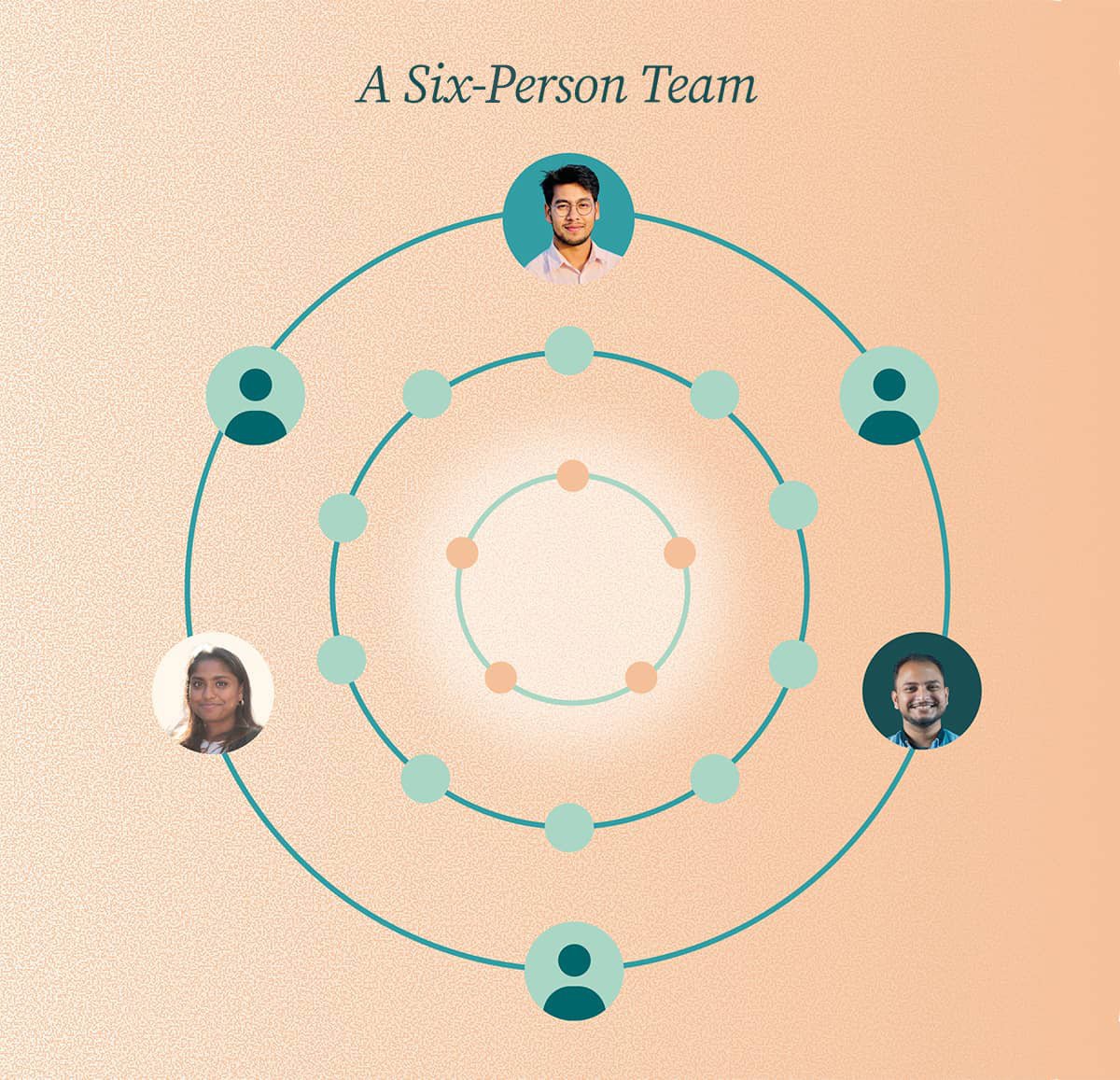
Every Other Team Tool Starts at the Team.
We start at the relationship.
A six-person team has fifteen working relationships inside it. Most team assessments explore composite, team-level analysis. Anchor Relationships® inverts that process. The relationship is a key unit of analysis, along with context and work process.
BEGIN WHERE IT MATTERS MOST
Which Program Fits Your Goals?

Team Assessment

Relationship 360