
RELATIONSHIP 360 ASSESSMENT
Capacity grows with others.
Which relationships are building yours?
RELATIONSHIP 360
Which of your relationships function as Anchors?
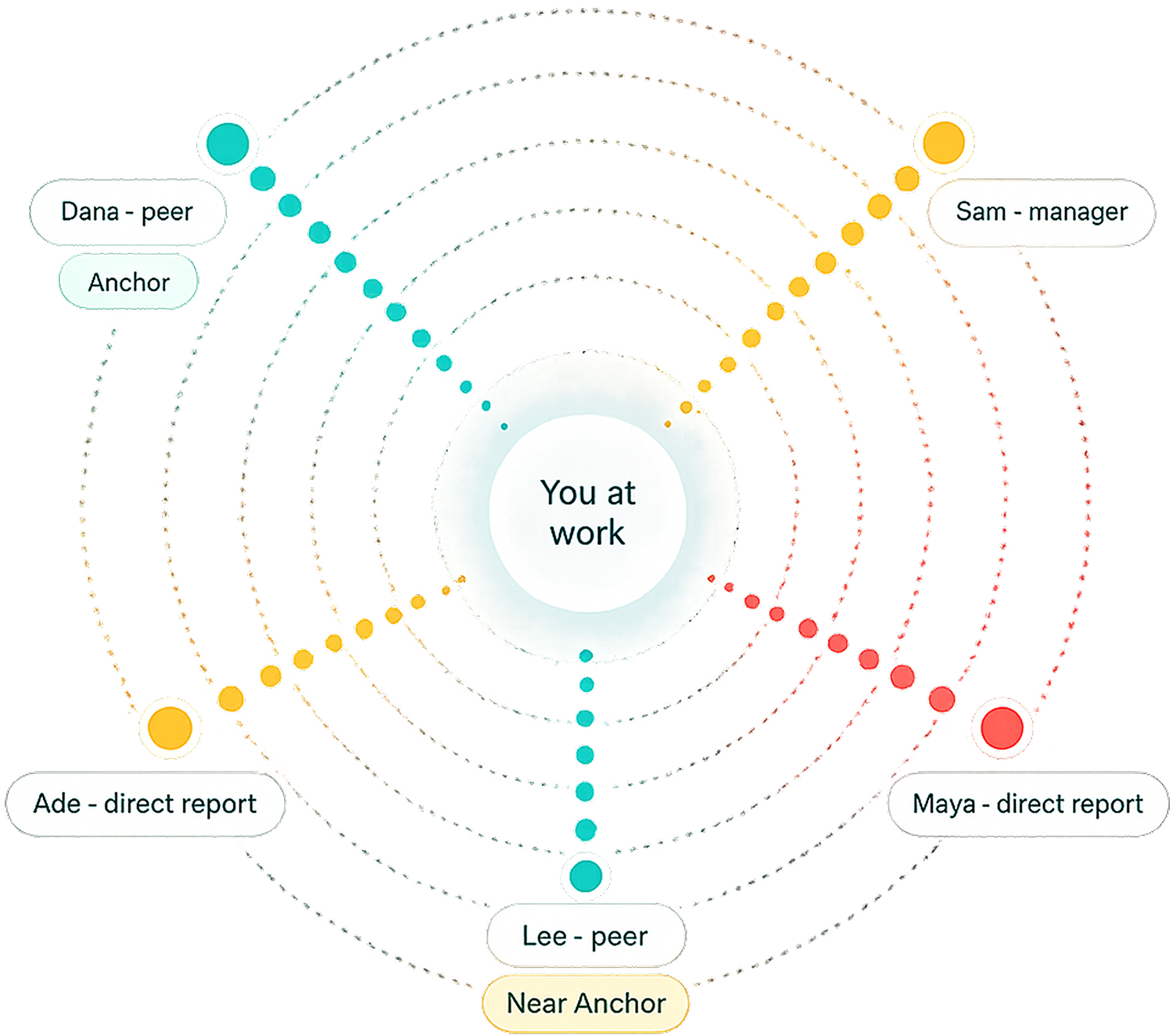
An Anchor Relationship is strong on all three qualities at once: Growth, Efficacy, and Values. Each ring reveals how one relationship reads across all three qualities, as the colleague experiences it.
You at work, seen through five working relationships.
Strong on all three. Disagreement deepens it, your confidence travels, and you can hold your line.
Two strong, Values not yet tested. The closest to a Full Anchor in your set
Reliable for Growth, lighter elsewhere. Worth appreciating for what it specifically gives.
Early and thin across the board. New, so largely untested rather than failing.
Feels invested, but steers you off your values when pressure is high.
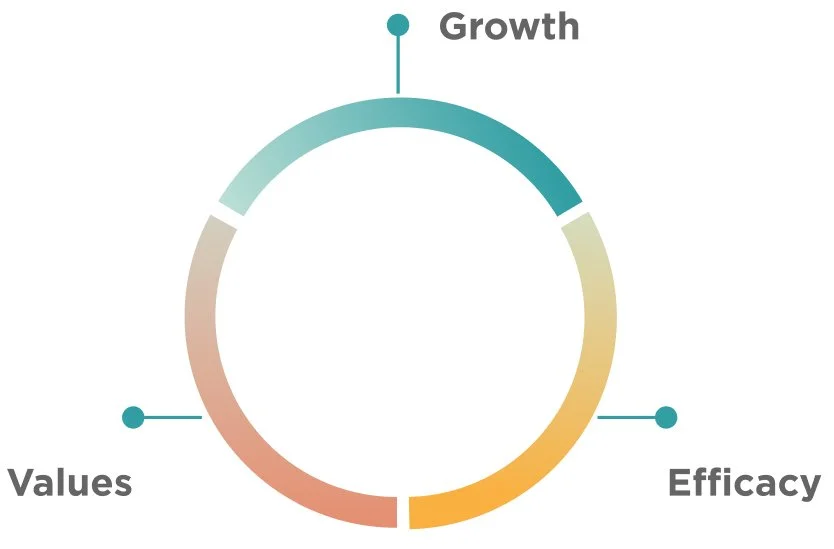
EACH QUALITY
Strong
Developing
Not Yet
“One Full Anchor in this set. Growth reads strongest across your network and Values support reads thinnest, with one relationship that may be steering you off your values rather than holding them. The gap points to where to build a new relationship or deepen one you already have. ”

Coach-Mediated
RELATIONSHIP 360
See yourself through the relationships you are part of
The Relationship 360 shows which of your closest working relationships strengthen your capacity under pressure and which quietly erode it. You name five colleagues, and each rates their working relationship with you on Growth, Efficacy, and Values. Individual responses stay confidential. A Certified Coach reads all of it together and delivers the findings in an interpretive session.
Your relational portrait
A coherent view of yourself as a relational actor, organized around your relational assets and your relational risks. It names the patterns you carry across ties and gives you language for them you have not had before. You are the subject; the relationships are the evidence.
Capacity you build in others
Five colleagues rate the same nine dimensions of working with you, so the report shows where you make people more capable across the group. When a dimension reads high for four or five of them, that is capacity you reliably build in others.
Purchased by the leader, their manager, or HR as part of a leadership development engagement. A Certified Coach administers the process and interprets all results.
4 QUESTIONS
What the mapping is built to surface

Need
What do I actually need from my professional relationships?
Turns a vague sense that something is missing into a specific understanding of it.

Investment
Where should I invest my limited energy?
A basis for where to invest and what to simply appreciate for what it provides.

Contribution
Where do I build capacity in others?
Shows where you reliably strengthen the people you work with, and the conditions that bring out the best in someone.

Potential
How can I do more for the people around me?
Surfaces where your effect on others could go further, pointing to relationships where a small shift would build more in someone.
PRESSURE MAP
See yourself through the relationships you are part of
This sample pressure map captures how five colleagues rate whether their relationship with you builds their capacity to handle pressure or not. Each rating comes from the other person’s perspective. The final column, “Your buffering” shows your pattern across all five colleagues.
Manager
Report
Peer
functional
Partner
Hired Peer
Buffering
feedback friction
or lose self-direction
erodes confidence
and role demands
your true self
against your values
DISCOVER THE TEAM ASSESSMENT
See how your relationships are working
See how relational behaviors on your team either fortify or undermine psychological safety, such as speaking up when it’s easier to stay silent and treating disagreements as learning opportunities.